
AI is Creating a New Global Labor Market and Forcing a Rethink of Hiring and Workforce Design
June 10, 2026
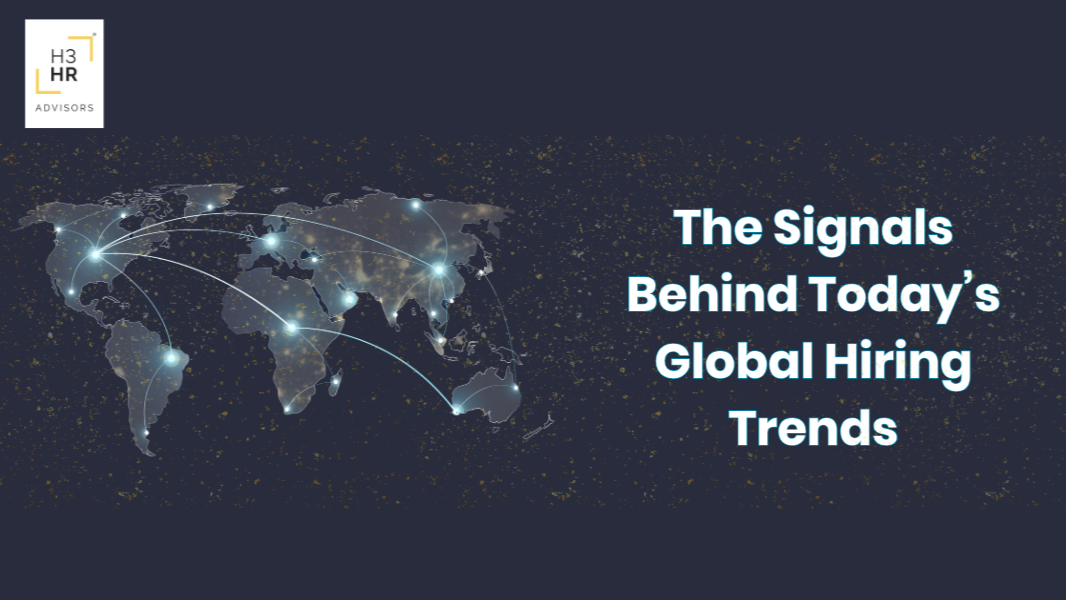
Artificial intelligence is reshaping work in ways that go far beyond automation. Beneath the surface, a new global workforce is emerging to train, support, and refine AI systems at scale. Drawing on insights from Deel’s State of Global Hiring Report, this analysis explores how this labor market is forming, why it is inherently global, and what it means for organizations building and managing workforces in an AI-driven world.
AI, the Labor Market, and What’s Happening Under the Radar
Much of the conversation around AI and work has centered on disruption. Leaders are focused on job displacement, employees are questioning job security, and organizations are exploring how automation might reshape productivity. That focus is understandable, but it misses an equally important development.
At the same time AI is changing existing roles; it is creating entirely new categories of work. Many of these roles are not reflected in traditional workforce plans or organization structures. They are emerging in a distributed, global, and often less visible layer of the labor market.
Data from Deel’s State of Global Hiring Report highlights this shift clearly. Some of the fastest-growing roles on the platform are directly tied to supporting AI systems. Data labelers and AI trainers, for example, have seen growth rates of 125% and 203% respectively. These roles are central to how AI systems function in practice, helping refine outputs, improve accuracy, and ensure performance over time.
What makes this development particularly significant is how and where this work is happening. These roles are often filled across borders, through flexible employment models, and at scale. The result is the early formation of a workforce that operates globally by default and is deeply embedded in the day-to-day functioning of AI systems.
From an analyst perspective, this signals a shift in how the impact of AI should be understood. The focus cannot remain only on which jobs may be reduced. A parallel labor market is forming around the operation, maintenance, and governance of AI. It is already scaling and already influencing how organizations think about talent.
The Emergence of the AI Support Layer of Work
AI systems rely on continuous human input. Training data, validation, refinement, and oversight are not one-time activities. They persist and expand as AI becomes more embedded in business processes.
What is emerging is a durable layer of work that supports AI systems. This includes roles responsible for labeling data, reviewing outputs, identifying bias, and ensuring systems operate in line with business and regulatory expectations. These roles are directly tied to the quality and reliability of AI-driven outcomes.
The growth patterns in the State of Global Hiring Report reinforce that this is sustained demand rather than short-term experimentation. Organizations are not only adopting AI tools. They are building the human infrastructure required to operate those tools at scale.
This represents a shift in how technology impacts labor. For years, technology adoption has been framed as reducing reliance on human work. In the case of AI, human work is being redefined. The emphasis is moving toward roles focused on guidance, evaluation, and continuous improvement of machine-driven processes.
These roles are also highly compatible with distributed work models. They can be performed remotely, scaled quickly, and organized across time zones. As a result, they are accelerating the move toward global workforce strategies. Companies are not only building AI capabilities. They are building global teams to support those capabilities.
Why This Workforce Is Global by Design
The growth of AI-related work is unfolding across borders from the outset. This is driven by the nature of the work itself.
Many of these roles are digitally deliverable and do not require proximity to a physical workplace. Organizations can scale quickly by accessing talent in multiple regions, enabling continuous workflows, and increasing operational resilience.
At the same time, global hiring patterns are not random. The report shows that cross-border hiring tends to concentrate within established corridors shaped by language, geographic proximity, and regulatory alignment. Markets like the United States and the United Kingdom continue to serve as central hubs.
This suggests that global work is becoming more structured rather than more diffuse. Organizations that succeed are not simply expanding globally. They are developing repeatable hiring models in specific regions where talent, compliance, and operational conditions align.
For AI-related work, consistency and quality are critical. That drives companies toward regions where they can build stable, scalable teams. Over time, these patterns form what can be described as talent corridors, or established pathways for sourcing and managing distributed work.
This represents a shift from opportunistic global hiring to intentional workforce design. Organizations are aligning talent strategies with specific regions and building the infrastructure to support those decisions.
The Hidden Risk Layer: Currency, Stability, and Worker Behavior
As global hiring expands, another layer of complexity emerges. Workers themselves are actively managing financial risk in cross-border environments.
The State of Global Hiring Report highlights patterns such as workers shifting from local currencies to more stable options like the US dollar or euro, and in some cases exploring alternatives like stablecoins. These behaviors reflect concerns about currency volatility and inflation.
For organizations, this introduces an important dynamic. Global work distributes opportunity, but it also distributes exposure to economic instability. In many cases, that exposure sits with the worker.
This has direct workforce implications. Financial uncertainty can affect engagement, retention, and performance. In roles tied to AI systems, where consistency and accuracy are essential, these pressures can influence outcomes.
There is also a broader trust dimension. Payment practices, currency options, and reliability all shape how workers perceive their relationship with an organization. These factors are becoming part of the overall employee and contractor experience.
Many organizations are still early in addressing this issue. Global hiring strategies often focus on sourcing talent, with less attention given to how compensation is experienced across different economic environments.
From an analyst perspective, this represents a gap between the expansion of global work and the maturity of the systems supporting it. Addressing financial stability will become an important part of workforce design.
The Operating Challenge: Managing a Global, AI-Driven Workforce
As organizations build global teams to support AI, operational complexity becomes more visible.
AI-related work is often performed by a mix of employees, contractors, and third-party contributors across multiple countries. Each category brings different legal, tax, and compliance requirements. Managing these differences carries risk, particularly as regulations evolve.
Compensation adds another layer of complexity. Currency fluctuations and regional differences require more dynamic approaches to pay. Organizations need visibility into how compensation is experienced across markets and the ability to adapt when conditions change.
Workforce visibility is another challenge. As distributed teams expand, it becomes harder to track who is contributing, where they are located, and how they are engaged. For AI-related roles, this visibility is critical because outcomes depend directly on the people performing the work.
Coordination is also becoming more difficult. AI support roles often require structured workflows and consistent quality standards. When work is distributed across regions and time zones, maintaining alignment requires more robust systems and processes.
This points to a broader shift. The challenge is no longer just acquiring talent. It is operating that talent effectively at scale. This requires integrated approaches to hiring, compliance, payment, and performance management.
The Role of Platforms Like Deel
As these challenges increase, infrastructure becomes a strategic consideration.
Platforms like Deel are positioned to support the full lifecycle of global work. This includes onboarding workers across jurisdictions, managing compliance, handling multi-currency payments, and providing visibility into distributed teams.
The trends highlighted in the State of Global Hiring Report make this role more important. The growth of AI-related work is driving demand for flexible engagement models and global scale. At the same time, workers expect stability and reliability in how they are paid and managed.
From an operational standpoint, platforms like Deel help reduce friction in global workforce strategies. They provide structure for compliance, consistency in payments, and centralized visibility into workforce activity.
From an analyst perspective, these platforms are becoming a form of infrastructure. They sit between systems of record and the emerging systems of execution that define AI-enabled work. Their role is to connect workforce data, compliance requirements, and operational processes into a scalable model.
For leaders, this is both a technology and a strategic decision. The ability to rely on a stable operational layer will be increasingly important as organizations expand globally.
What Leaders Should Do Now
The changes shaping global hiring and AI-driven work are already underway. Leaders need to translate these signals into action.
First, organizations should expand how they define the workforce. AI-related roles, contractors, and global contributors are becoming central to operations. Workforce planning should reflect this broader reality.
Second, leaders should develop a clear global talent strategy. This includes identifying key regions, understanding local dynamics, and building repeatable hiring models.
Third, financial stability should be considered part of workforce design. Currency strategies and payment flexibility can influence engagement and retention.
Fourth, organizations should invest in infrastructure that supports global operations. This includes systems for compliance, payments, and workforce visibility.
Finally, leaders should rethink how performance is measured. In AI-driven environments, value is created through a combination of human input and machine output. Metrics should reflect this interaction.
Conclusion: A Global, Layered, Human Future of Work
AI is reshaping work in ways that extend beyond automation. It is creating new categories of labor and new models for how work is organized.
This shift is inherently global. The workforce supporting AI operates across regions, currencies, and employment models. It introduces both opportunities and complexity for organizations.
At the same time, human contribution remains central. AI systems depend on people to train, evaluate, and guide them. The effectiveness of these systems is directly tied to the quality of human work behind them.
The State of Global Hiring Report highlights this transformation clearly. It shows a workforce that expands beyond traditional boundaries and adapts in real time.
For leaders, the implication is clear. Success will come from understanding not only AI itself, but the human systems that support it. Organizations that build the capability to operate global, distributed workforces will be better positioned to realize the full value of their AI investments.
The future of work is taking shape now. It is global, layered, and deeply human.

How we can help
Led by Trish Steed and Steve Boese, H3 HR Advisors harnesses over 40 years of experience to delivery HCM insights and guidance to global organizations.
H3 HR Advisory services
By leveraging technology, analytics, and our deep industry knowledge we can help you to reposition your workforce and ensure that you have the right people with the right capabilities in the right roles to positively impact the growth of your business.
HR Happy Hour Podcast Network
Created in 2009, The HR Happy Hour Show is hosted by Steve Boese and Trish Steed and is the longest continuously running internet radio show and podcast on Human Resources, HR Technology, Talent Practices, Workplace and Leadership topics.
H3 HR Speaking Services
We work closely with every client to customize your content - keynotes, webinars, research, infographics, and buyer’s guides - to inspire, educate and inform the audience enabling you to reset and realign your organization for a talent-led breakthrough.
Get in touch
Talk to us today and find out how we can help you and your organization leverage HCM technology to attract, onboard, retain and manage top talent.