
How to Prevent Employee Burnout Before It Starts
August 15, 2026
How to Prevent Employee Burnout Before it Starts
Written by: Grace Hansen
Organizations have often focused on improving employee performance by asking people to work faster and produce more. Yet as work becomes more digital, another challenge has emerged. The greatest threat to performance is a lack of sustainable energy.
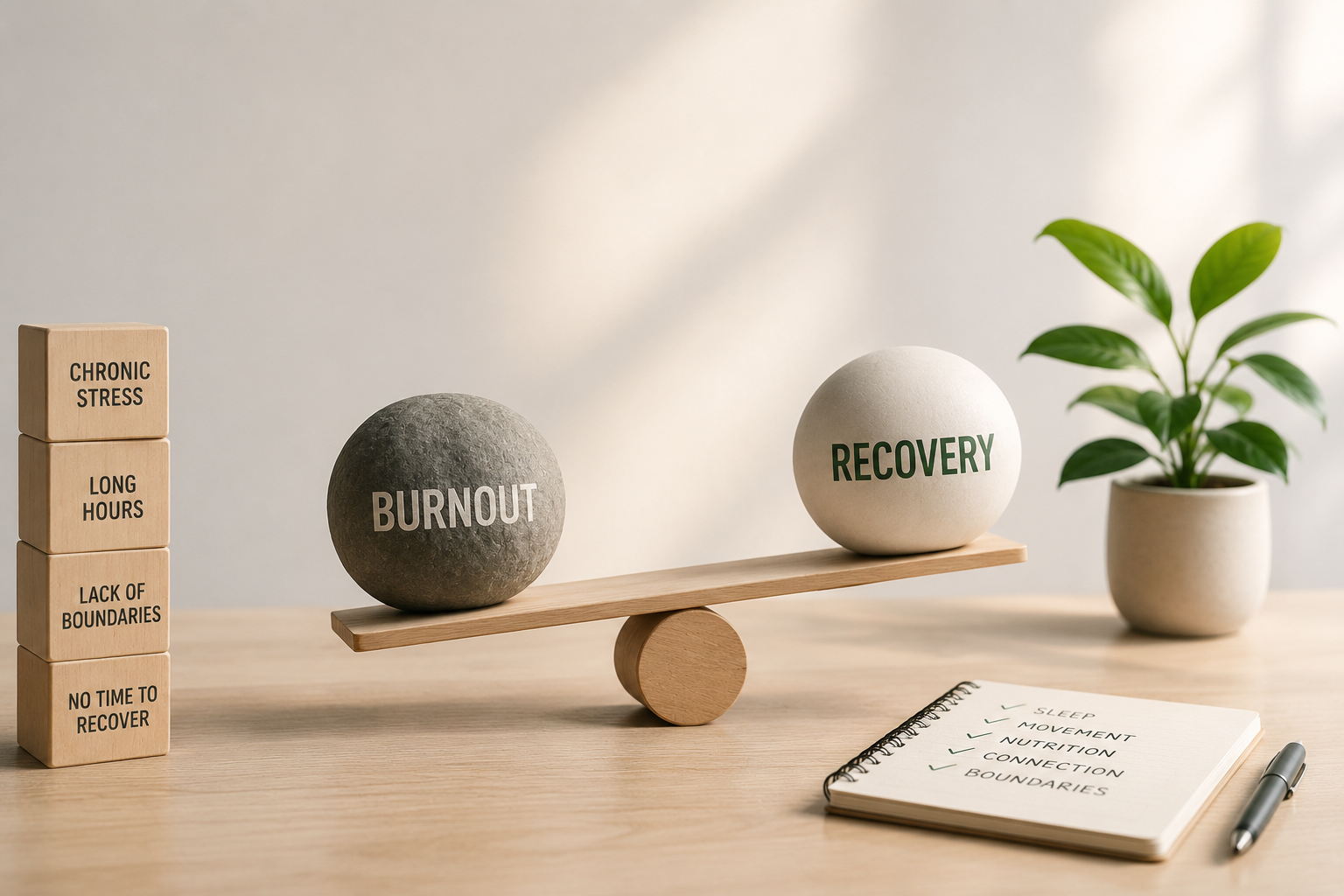
Employee burnout is a very real problem in the workplace. It occurs from months of chronic stress, high demands, and not enough time to recover. High performing organizations understand that employee wellbeing and business performace are inseparable because both depend on the same foundation: people who have the physical, mental, and emotional capacity to do their best work. Unfortunately, many organizations still lack the tools to focus on employee well-being until performance drops and valued team members decide to leave. By then, the damage has already been done.
Burnout is preventable. Learning how to focus on habits that improve and maintain overall well-being can make a huge difference for every employee. It occurs through organizations that design work that continually restores the energy people need to perform and thrive over time.
Prevention is Key
Treating burnout after the fact is much harder than preventing it in the first place. Recovery often requires weeks or months of reduced workload, improved sleep, stress management, and rebuilding emotional stamina. Organizations that focus on prevention create a culture where employees are excited to go to work, not being drained by it.
Employee burnout prevention doesn’t need to be expensive. It begins with encouraging healthy routines and promoting a workplace that values recovery as much as productivity. When leaders normalize taking breaks and prioritizing their health, other employees will be more likely to adopt these behaviors in their own lives.
The Power of Small Daily Habits
Taking care of yourself is not just something you do now and then; it’s about making healthy choices every day. Simple habits practiced frequently have a greater impact than dramatic lifestyle changes. Encouraging employees to take a walk on their break, step outside for some fresh air, or pause to relax during stressful workplace situations can all help reduce cortisol and keep the body and mind in a positive state. Over time, these small habits improve energy, concentration, emotional regulation, and overall resilience.
Sleep: The Groundwork for Success
One of the most important forms of recovery happens when we sleep, but it is often one of the most overlooked contributors to workplace performance.
Quality sleep restores the brain’s ability to concentrate and adapt to change. When employees consistently get around 8 hours of sleep, they are able to control emotions better, pay attention more, and retain new information more easily. On the contrary, when employees consistently sacrifice sleep to meet increasing work demands, their cognitive performance begins to decline as their cortisol levels spike. This reduces attention span and raises the risk of health problems.
Organizations can support healthy sleep by promoting being off from work when the workday is over. Work should never require an employee to sacrifice sleep. Encouraging healthy work habits and reasonable expectations will help employees sustain the mental energy needed for continued high performance.
Movement is Medicine
Energy is also restored through movement. While many jobs today require people to sit for long periods, our bodies were designed to be active.
Regular movement helps improve focus, improve circulation, increase energy, and boost mood. Even brief activity can provide measurable benefits. A five or ten-minute walk or standing while taking calls can help reset both the mind and the body. Creating opportunities for movement doesn’t require a fitness program. Offering flexible schedules that allow time for exercise helps to support healthy employees. Organizations that make this a priority for their employees throughout the day help to replenish energy instead of just depleting it.
Movement isn’t time away from work – it often improves the quality of the work that follows.
What is Stress Physiology and How Does it Work
When the brain senses danger, the sympathetic nervous system, which is the “fight or flight” system, activates and releases adrenaline and cortisol, the main stress hormones. Heart rate increases, breathing quickens, and susvival mode is in full effect. This is physiological stress.
This response is incredibly useful during emergencies. The problem is that today’s workplace stressors can keep this system activated for extended periods of time. Without opportunities to recover, the body remains in a prolonged state of physiological stress. Prolonged activation can contribute to difficulty concentrating, lack of sleep, fatigue, high blood pressure, and increased anxiety.
Recovery occurs when the parasympathetic nervous system, the “rest and digest” system, is activated. Activities such as deep breathing, getting adequate sleep, physical activity, spending time with friends and family, and time outside all help shift the body back toward recovery.
Understanding this biology helps explain why recovery is an essnetial part of everyday functioning.
Building a Healthier Workplace
Preventing burnout requires a shift from reacting to problems to being proactive in your efforts. Leaders can make a significant impact by encouraging manageable workloads, promoting movement throughout the workday, respecting recovery time, and recognizing that employee health directly influences organizational success.
The healthiest workplaces are the ones that provide the tools, the culture, and the flexibility needed for employees to recover from any stress that may occur. When organizations focus on keeping their employees healthy through small daily habits, they create workplaces where people want to work.
Burnout is expensive, but prevention is not. And it’s one of the smartest investments an organization can make.


How we can help
Led by Trish Steed and Steve Boese, H3 HR Advisors harnesses over 40 years of experience to delivery HCM insights and guidance to global organizations.
H3 HR Advisory services
By leveraging technology, analytics, and our deep industry knowledge we can help you to reposition your workforce and ensure that you have the right people with the right capabilities in the right roles to positively impact the growth of your business.
HR Happy Hour Podcast Network
Created in 2009, The HR Happy Hour Show is hosted by Steve Boese and Trish Steed and is the longest continuously running internet radio show and podcast on Human Resources, HR Technology, Talent Practices, Workplace and Leadership topics.
H3 HR Speaking Services
We work closely with every client to customize your content - keynotes, webinars, research, infographics, and buyer’s guides - to inspire, educate and inform the audience enabling you to reset and realign your organization for a talent-led breakthrough.
Get in touch
Talk to us today and find out how we can help you and your organization leverage HCM technology to attract, onboard, retain and manage top talent.